



When temperatures climb into triple digits, most people take refuge indoors. For Maricopa’s firefighters, the heat is just another part of the job.
Every emergency call means suiting up in as much as 50 pounds of protective gear, whether it’s 80 degrees or 115.
Assistant Chief Chris Bolinger has spent more than 25 years in fire service, including two decades with Maricopa Fire/Medical Department. He sat down with InMaricopa to explain how surviving an Arizona summer isn’t about toughing it out; it’s about preparation, hydration and knowing when to cool down.
How does extreme heat change the way firefighters approach a shift?
Heat stress is something that we constantly have to mitigate and plan for. We encourage guys to hydrate regularly on their days off so they’re prepared before they even come to work. We schedule outside training early in the day before it hits 105 degrees, make sure our medical resources are ready and plan almost everything we do around the heat during the summer.
What does extreme heat do to a firefighter’s body?
The big danger is physiological, but also mental. When you’re hot, your body starts going into cognitive decline and you can start making bad decisions. It also makes you physically weaker, affects your fine motor skills and makes it harder to recover. That’s why cooling down between work cycles is so important.

Depending on what protective equipment they’ve got and what tools they’re carrying, it weighs between 30 and 50 pounds.
What’s one misconception people have about firefighters working in the summer?
People think we only wear turnout gear for fires. We wear it on gas leaks, car accidents and other emergencies, too. Even if we’re not inside a burning building, we’re standing outside in 115-degree heat, and our bodies can’t cool off on their own.
Why is hydration such a priority?
Hydration is important before a call comes in, but before the shift even starts. We have reminders throughout the station, and hydration breaks are a planned part of every workout and training exercise. We can’t afford to have firefighters getting behind the eight ball.
How has firefighter gear changed over the years?
Our turnouts have gotten significantly less bulky, and they retain a lot less heat. That allows us to be more efficient on the fireground and training ground, so we’re not spending as much time in those closed-in environments.
What is firefighter rehab, and why is it important?
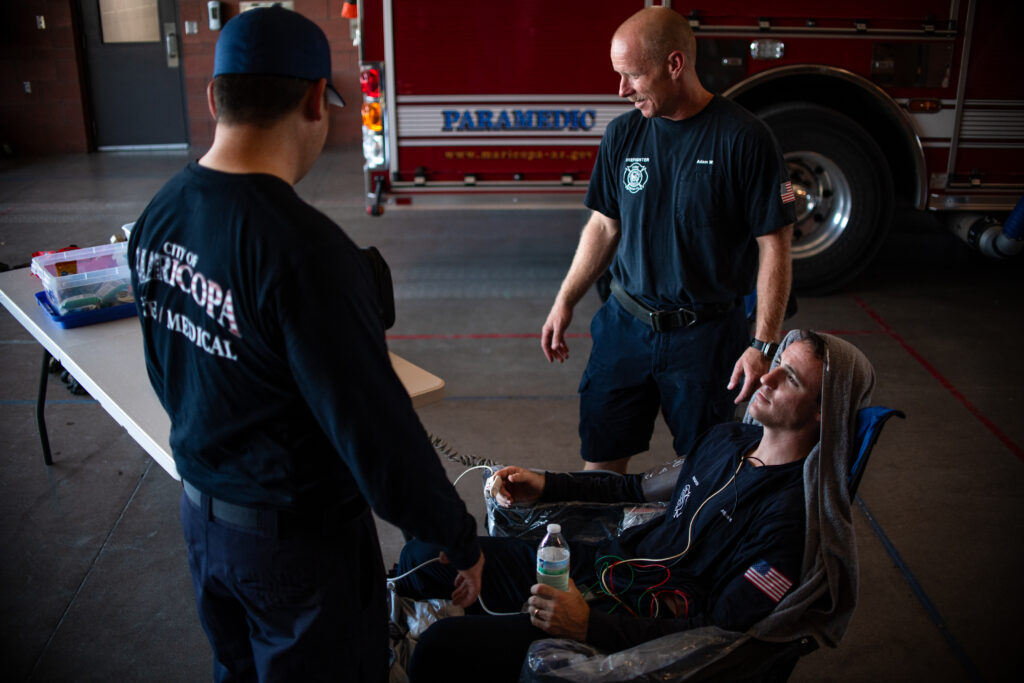
Rehab is our chance to get firefighters cooled down and ready for the next call. After decontamination, we take off our turnout gear, expose the big muscle groups to the air and immerse our forearms in ice water. The cool blood circulates back through the body and helps lower our core temperature.
We’re not just trying to cool someone off. We’re helping them recover so they can safely go back to work if they’re needed again.
How has recovering from the heat changed over the years?
It used to be, “Find some shade and get your stuff off.” As new ideas came along, we evaluated them and improved our process. One constant has been our Fire Corps volunteers. They respond to scenes, set up the rehab area and take care of our firefighters while they’re recovering.
What’s one lesson residents can borrow from firefighters during the summer?

What warning signs of heat illness shouldn’t people ignore?
If you feel hot, it is hot. People try to push through it instead of listening to their body. By the time you stop sweating, you’re way, way, way behind the eight ball.
After more than two decades as a firefighter, what still motivates you?
I like being the guy that people call on. I like serving. I like being able to have an immediate resolution to things. If I get called to somebody’s house for an emergency, an hour later I know whether I did a good job or a bad job. I like helping people.

Types of heat illness
Source: Centers for Disease Control and Prevention
Heat cramps
- Painful muscle cramps or spasms
- Heavy sweating
What to do: Rest in a cool place and drink water or an electrolyte-replacing beverage. Wait until cramps stop before resuming activity.
Heat exhaustion
- Heat crap signs
- Cool, pale or clammy skin
- Headache
- Dizziness or fainting
- Nausea or vomiting
- Weakness or fatigue
What to do: Move to a cool place, loosen clothing and sip cool water. Apply cool, wet towels or take a cool shower. Seek medical care if symptoms worsen or last longer than an hour.
Heat stroke (medical emergency)
- Heat exhaustion signs
- Confusion or slurred speech
- High body temperature (103 degrees or higher)
- Loss of consciousness
- Seizures
What to do: Call 911 immediately. Move the person to a cooler place and cool them rapidly with ice packs, cold water or wet towels while waiting for emergency responders. Do not give fluids if the person is confused or unconscious.





One Response
I have so much respect for these men and women.And even more when visiting 571 with a Cub Scout pack on a tour and presentation by I think 5/6 firefighters.They are so informative to the scouts and the parents as well.It wasn’t just a walk around the firehouse,but a detailed shift throughout their stay when on duty.I think we were there for over two hours and they had been called out prior to that.And not one hurry up look or rushing through their great presentation of their ability and dedication to us and the citizens they serve.They are underpaid,hardworking fathers,sons,daughters,mothers and etc.If you ever have a chance to catch a tour please go.