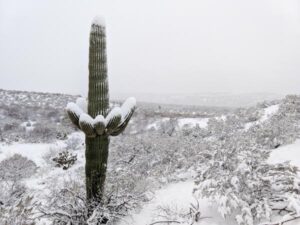

The Sonoran Desert is the most biodiverse desert in the world. It’s home to plants and animals that cannot be found anywhere else on Earth.
Historically, wildfires are uncommon in the Sonoran Desert, which keeps our fire sensitive plants safe. All that bare ground is a natural firebreak, but there is a new threat to the Sonoran Desert — stinknet.
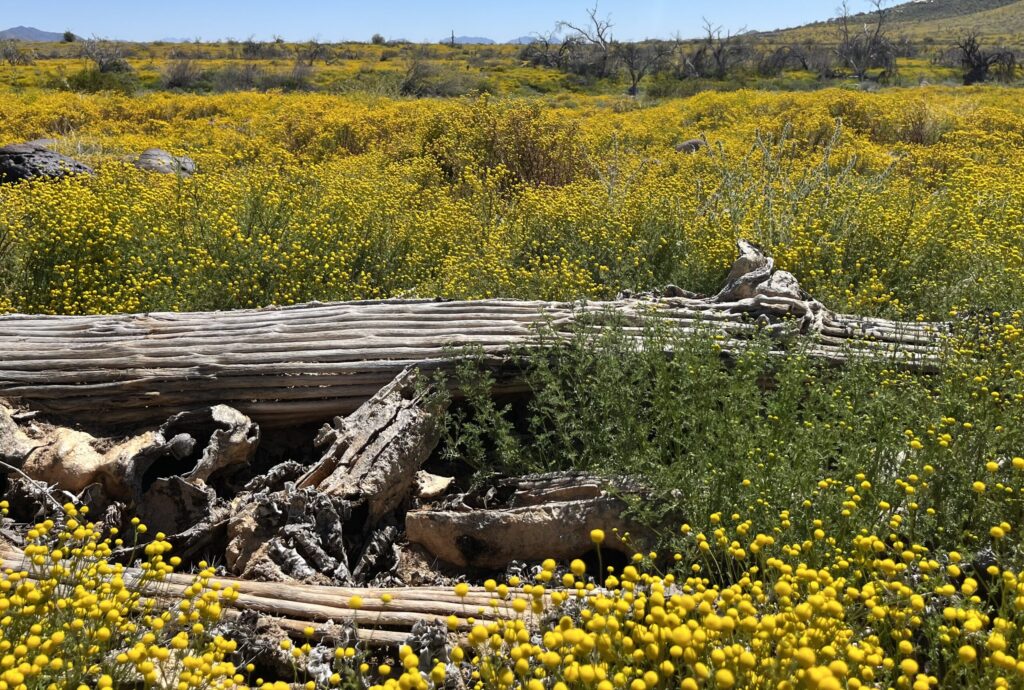
Stinknet, or Oncosiphon pilulifer, is an invasive plant species that gets its name from its distinctive smell. Its height ranges from 2 inches to 2 feet tall. Stinknet typically blooms in March or April. Stinknet flowers are spherical, yellow to gold in color, have no petals and are about the size of a pencil eraser. Its leaves are dark green, resemble carrot tops and have a pungent odor that has been described as smelling like a teenager’s dirty socks. When it dries up, the plant has bronze leaves, rust colored flowers and a dry, crispy texture. This is when it’s most flammable.
Stinknet is native to South Africa and was unintentionally brought to California in the 1980s. It was first observed in Phoenix in 1997 and then in Tucson in 2015 and is classified as a State of Arizona Class B noxious weed. Stinknet is the most aggressive weed to date in Arizona and its spread went unnoticed for more than 15 years.
Now, it is widespread in Maricopa County and is quickly spreading throughout Pinal County. It outcompetes and displaces native plants, destroying native ecosystems and habitats. This results in the loss of native wildlife.
When stinknet plants are dry, they are an extreme fire hazard, which is dangerous for humans, native plants and native wildlife. Those natural firebreaks that are unique to the Sonoran Desert? They disappear when stinknet takes over. Stinknet can also pose severe health risks for humans as it can aggravate allergies and cause headaches, rashes and difficulty breathing. Further, it can cause skin allergies and otherwise hurt our four-legged friends.
You can help stop the spread! After you’ve been hiking, inspect boots, gear, pets and vehicles for plants or seeds. Remove plants and mud you find. Do not move plants or soil from invaded areas.
Identify it. Look for spherical flowers without petals and the distinctive stink. Report it to Stinknet.org and remove it. Lookalikes include pineapple weed (pineapple scented with pointed, cone-shaped flowers) and dogweed (pleasant, mild scented with golden, daisylike flowers). To remove it, put on gloves, pull the plant out of the ground and bag it to prevent the spread of seeds.
Stinknet is persistent, but so are we in our efforts to preserve the magnificent Sonoran Desert.