
The Greater Maricopa Business Alliance (GMBA) believes one of the most important investments we can make in economic development is preparing the next generation to work, build businesses, raise families, and establish their futures in our community. That commitment is why GMBA supports Proposition 416 and opposes Proposition 320. Although these propositions address different aspects of public education, both have implications for workforce development, local economic stability, and the ability of our schools to meet the needs of Maricopa students.
YES on Proposition 416: Continuing an Investment in Maricopa’s Future
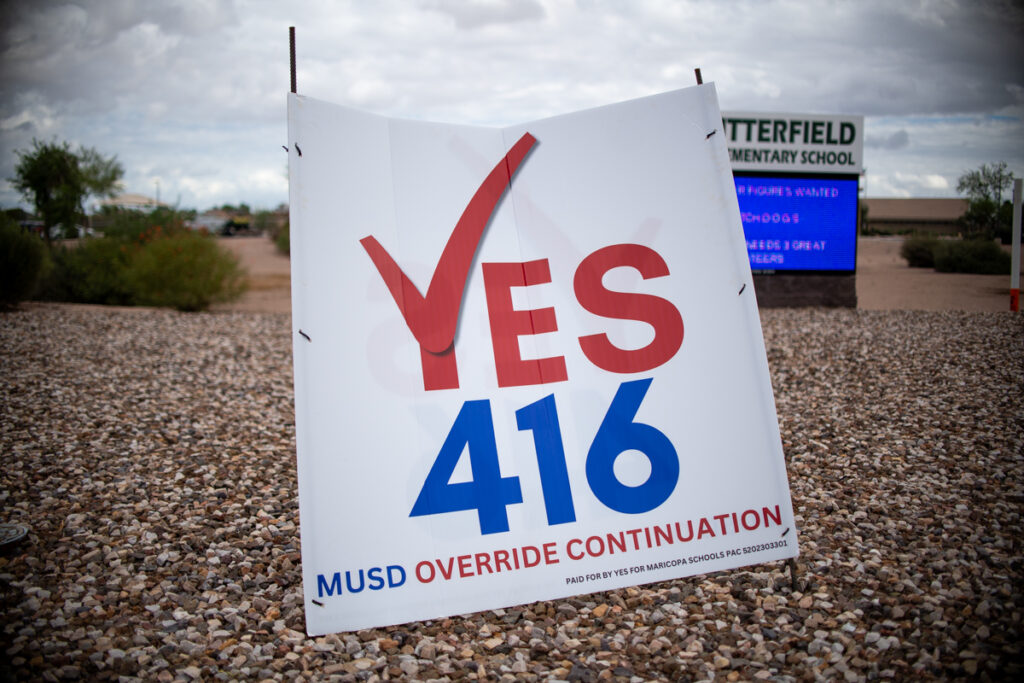
Proposition 416 continues Maricopa Unified School District’s existing Maintenance & Operations override. It is not a new tax, but a continuation of funding originally approved by local voters in 2016 and renewed in 2021. For the 2026–27 school year, the override represents approximately $7.8 million in MUSD’s operating budget. Without voter approval, that funding will begin phasing out in the 2027–28 school year, declining by approximately $2.7 million annually until eliminated.
According to MUSD, the loss of this funding would ultimately result in:
- Elimination of RAM Academy, the district’s alternative graduation and credit-recovery program
- Reductions in teaching and support staff
- Larger class sizes
- Reduced investment in student and instructional technology
These reductions affect more than school operations. They would have consequences for local employment, student opportunities, and the development of Maricopa’s future workforce.
Supporting our schools is both an education investment and an economic-development investment. MUSD is Maricopa’s largest employer. Its teachers, administrators, paraprofessionals, transportation employees, and support staff are our neighbors, customers, volunteers, and community members. School district employment supports local households and businesses. Reducing positions affects families and the broader economy. Equally important, these employees are responsible for educating and preparing the next generation of workers, entrepreneurs, and community leaders.
Of particular concern to GMBA is the potential elimination of RAM Academy. RAM Academy provides an alternative pathway for students who have fallen behind academically, helping them recover credits and continue working toward high school graduation. Not every student succeeds through the same educational approach. Some face academic, personal, or family challenges that make a traditional pathway difficult.
Programs like RAM Academy provide another opportunity for students to complete their education and pursue employment, technical training, military service, or higher education. The impact extends beyond the individual student. Helping a young person graduate can positively influence an entire family’s future while strengthening the community’s long-term workforce. Workforce development must include opportunities for students who need a different path to success. Preserving those opportunities is an important reason GMBA supports Proposition 416.
NO on Proposition 320: Preserving Flexibility in Education and Workforce Preparation
Proposition 320 would establish a statewide requirement for affected school districts to eventually direct at least 60% of operational spending toward expenses classified as direct instruction. GMBA supports responsible education spending, transparency, and accountability. However, we are concerned that a uniform spending requirement could limit the flexibility school districts need to address local educational priorities and workforce-development opportunities.
Under Proposition 320, the Arizona Auditor General would be responsible for defining qualifying direct instructional expenses and operational spending. The concern is not whether education dollars should benefit students. They absolutely should. The concern is whether a statewide spending formula adequately recognizes the many resources and services necessary to prepare students for success.
Maricopa Unified School District currently offers Career and Technical Education (CTE) pathways that connect classroom education with practical skills, career exploration, and employment opportunities:
- Agriculture
- Business management
- Education and training
- Hospitality and tourism
- Information technology
- Law and public safety
- Marketing and communications
- Science, technology, engineering, and mathematics (STEM)
Effective workforce preparation can require specialized equipment, technology, industry certifications, career counseling, employer partnerships, transportation, and work-based learning experiences. Not every expenditure that supports student success fits neatly into a single instructional spending category. GMBA’s concern is that a rigid statewide formula may create unintended consequences for programs and services that contribute to career readiness. As local employers continue to identify workforce availability and skills development as important business needs, our schools must retain the ability to respond to those needs.
Maricopa residents elect a local school governing board to oversee district operations, establish priorities, and make decisions about educational resources. That board is accountable to the community it serves. Parents, residents, educators, and employers can participate in public meetings, review budgets, provide input, and hold elected board members accountable.
GMBA believes local school leaders should retain meaningful flexibility to allocate resources based on student needs, community priorities, and available funding. We support transparency and fiscal responsibility. We also believe accountability should consider educational outcomes, including graduation rates, career readiness, student achievement, and access to meaningful educational opportunities. The ultimate measure of education spending should be how effectively it prepares students for success.
GMBA’s three mission pillars reflect our commitment to a strong local economy and a community where businesses and families can thrive. Workforce development begins long before a young person enters the job market. It begins with access to quality education, opportunities to explore careers, programs that help struggling students graduate, and partnerships connecting schools with employers. Today’s students are tomorrow’s employees, entrepreneurs, business owners, and community leaders. Our responsibility as a business organization is to advocate for the resources, partnerships, and opportunities that help them succeed.
For these reasons, the Greater Maricopa Business Alliance:
SUPPORTS PROPOSITION 416
To continue locally approved funding that supports teachers, manageable class sizes, student technology, and alternative graduation opportunities such as RAM Academy.
OPPOSES PROPOSITION 320
Because of concerns that a statewide instructional spending mandate could limit local flexibility and affect resources important to student success and workforce preparation.
Strong schools help build a strong workforce. A strong workforce supports a strong economy. Investing in Maricopa’s students is investing in Maricopa’s future.