
Finding good teachers is tough. An already stressful job has become more difficult with the COVID-19 pandemic, increased politicization and the pressure for students to achieve in the classroom.
A nationwide shortage of teachers has been felt in Arizona for several years. School districts across the state, including Maricopa Unified School District, have scrambled to find qualified teachers.
The profession is going through a metamorphosis, according to Tom Beckett, MUSD’s human resources director. A career in teaching is exciting for some, challenging for others.
“You almost have to be on a mission to do it and feel good about it,” he said. “It’s a highly competitive market, and there are lots of jobs out there where people can make more money with fewer challenges.”
Like many other districts, MUSD has gotten creative in its effort to hire more teachers. One component of its strategy is attracting foreign teachers to Maricopa classrooms.
It’s not a new initiative. The district has brought high-quality teachers from other countries since 2015. But the strategy is highly successful and gaining steam.
“I’m not sure what we would have done if we didn’t have these 50 teachers,” Beckett said.
A GROWING NUMBER
The district benefits by attracting certified teachers with experience and expertise in their disciplines.
The number of foreign-national teachers in the district rose this year to an all-time high of 65 — there were just two in the program’s first year — about 10 percent of all faculty positions in the district. In fact, their ranks in the district have grown more than 60% in just the last year.
Superintendent Dr. Tracey Lopeman is proud of the program.
“Positions in high-need areas such as math, science, special education and the arts are always challenging to fill,” Lopeman said. “This year, foreign-national teachers are a significant addition to all the new recruits at MUSD, and they help fill many of those high-need positions.”
In addition to filling a huge need — there are 30 teaching at Maricopa High School this year — foreign teachers are an excellent fit, according to principal Deana McNamee.
“This is my first year working with the foreign-national teachers,” she said. “I find it very exciting. They are great employees who are eager to learn and eager to collaborate with the staff and their colleagues. They are grateful to be here in the United States and that spills over into their job and their enthusiasm for the job.”
As a rule, McNamee added, they are enthusiastic about extracurricular activities and immersing themselves in the MHS culture and the Maricopa community.
CULTURAL BENEFITS
At Maricopa Elementary School, there are nine foreign teachers this year.
Principal Jennifer Robinson said she’s getting more and more inquiries from foreign teachers looking to learn about the school and inquire about open positions. She believes the program is helping the district attract quality teachers.
“We’re very open to having the best qualified candidate and exploring different options with teachers from different countries,” she said. “The most important thing is ensuring that the students get the quality education they deserve.”
Part of that quality education is the ability to learn about other cultures from their teachers.
Most of MUSD’s foreign teachers are in the United States on a J-1, or non-immigrant cultural exchange visa, which mandates they share elements of their culture with students, faculty and staff at their school — and also learn about United States and Arizona culture. The visas are for three years but may be extended for up to two additional years. When the visa expires, the teacher must leave the country.
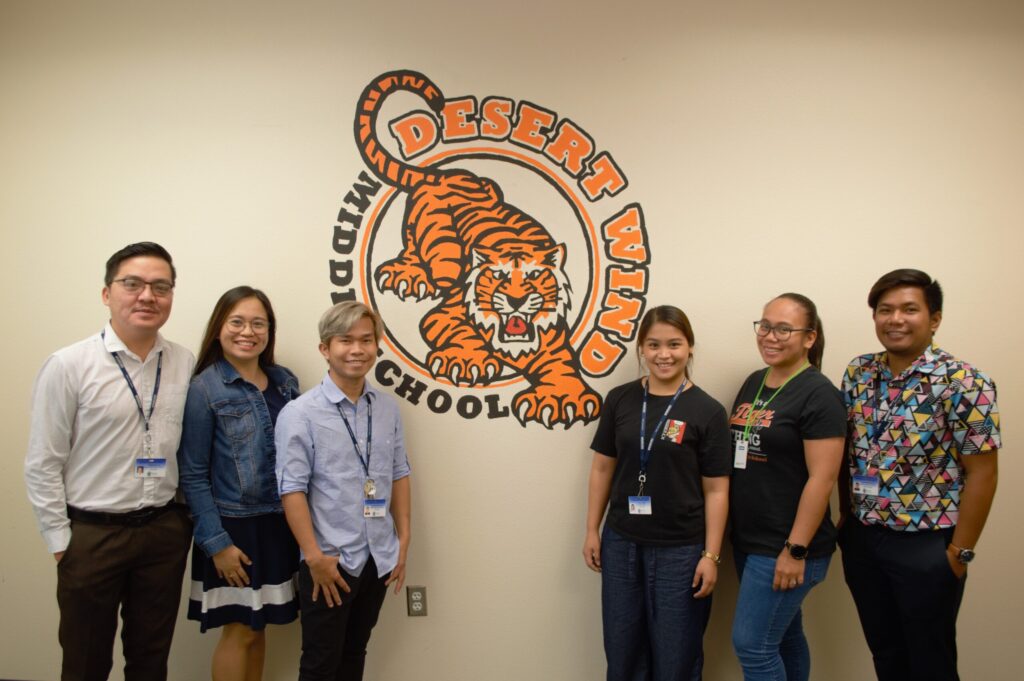
Michaella Banate is a science teacher in her first year at Desert Wind Middle School. Like the majority of the district’s foreign teachers, she is from the Philippines. She taught there for seven years prior to coming to the U.S. After participating in a cultural exchange program at her school in the Philippines, she wanted to immerse herself even more in this country. So, she applied at DWMS and was hired.
“Part of the program is for us to share our culture, our tradition and our knowledge,” Banate said. “One of things I incorporate into those lessons is some of our language. And Filipinos love food, so I share that part of our culture as well.”
Kim Giner, a math teacher in his sixth year at MHS, came to Maricopa after teaching two years in the United Arab Emirates. He uses technology to share his culture.

“I try to show them YouTube videos of my country, what it looks like, and where it is,” he said. “The kids sometimes don’t know where the Philippines is, so we start there. The best way I’ve found to make it work is to get an information exchange going. We’ll play some games and do informal things like that. I’m amazed sometimes at how open the kids are and fascinated sometimes by the results we get.”
“Personally, I love Mr. Giner,” freshman Ava Lawrence said of her teacher. “It’s so cool to learn about a variety of places he has taught and how it’s different there versus here. I think having a foreign teacher should be modernized in every school because they really open your eyes to how school in other countries works.”
A GLOBAL PERSPECTIVE
Beckett has a slightly different take on how exposure to diverse cultures can benefit students. In the increasingly global economy, it’s very possible students will work for bosses from other countries. Learning from foreign teachers will give them experience working with others from different cultures.
“We gain value from having them here,” Beckett said. “It gives the students an international and global perspective they wouldn’t otherwise get.”
Part of that perspective is helping local students gain an appreciation for what they have here. Nerwin Balilu, a Filipino who teaches Exceptional Student Services at Desert Wind Middle School, put it this way:
“I hear from kids, ‘I hate going to school.’ I tell them they should feel grateful. To be in school with free food, free laptops, pencils, everything they need. When I was their age, I came to school with nothing in my pockets. I didn’t eat. I just stayed in the library and read books. We didn’t have bookbags, we just had plastic bags to put our notebooks and things in.”
He does not want students to feel bad but rather help them “appreciate what America has given you, what MUSD has given you. These privileges are something you should take advantage of. Once you’re older and you’ve traveled the world a bit, you will have a different perspective, not just this one.”
Kiran Satyavarapu is a geometry teacher from India in his second year at MHS. He tries to get to know his students, and that pays dividends in many ways. Building a personal relationship with a student helps them learn better, he said. By the same token, in his native India, everyone participates in class, and he finds it harder to get kids to do so here.
Satyavarapu had a specific reason for wanting to come to Maricopa.
“A lot of it was the smaller community,” he said. “In India, you never see these kinds of things, like running into students or parents in the grocery store and having them say hello. Those connections matter a lot.”

First row: Lourdes Abellaneda, Marck Albiso, Adolia Aure, Subie Bahian, Girlie Banalo
Second row: Jude Basiga, Claudine Canoneo, Karen Casel, June Delgado, Reynalyn Galas
Third row: Kim Giner, Lavender Giner, Alissa Guisado, Viz Herezo, Smitha Jacob
Fourth row: Sherry Jaura, Deva Kothandapani, Ronnie Lamboso, Niel Pableo, Jessica Ribeiro
Fifth row: Danria Sabellon, Dindo Soco, Eunice Soco, Irey Soon, Abigail Villavicencio
This story appears in the September issue of InMaricopa.