

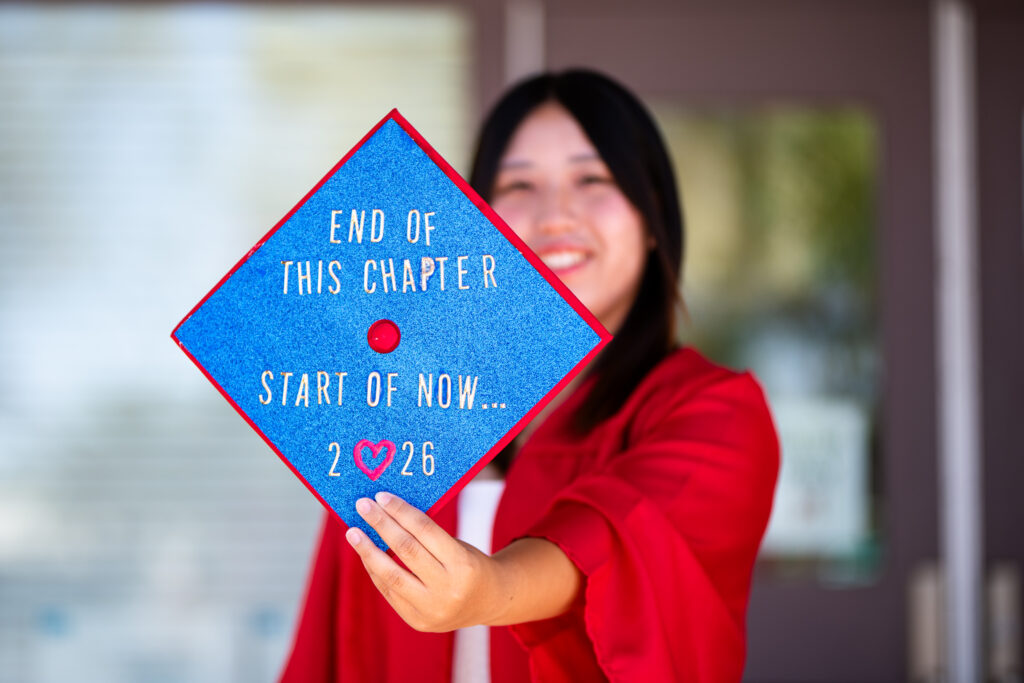
When Hana Iwashita arrived in Maricopa last August, she thought she was prepared.
The high school junior from Yokohama, Japan, had studied English, researched Arizona and dreamed about life in America. Then she stepped off the plane into triple-digit heat, found herself navigating a new school and realized understanding English in a classroom was very different from speaking it with hundreds of people every day.
Ten months later, Hana prepared her departure with new friendships, new confidence and memories ranging from homecoming and prom to California burritos and Arizona sunsets. Before heading home, she sat down with InMaricopa to share what she learned.
Responses have been lightly edited for clarity and brevity.
Why did you decide to study abroad in America?
I chose America because everyone speaks English, and there are so many immigrants. I thought I could learn not just American culture, but other cultures too. My sister came to America four years ago and had so many great experiences, so I wanted to do the same.
What was your first impression when you arrived in Arizona?
It was crazy hot. In Japan it gets really humid, but here it’s dry. I had never felt that kind of heat before. I arrived at night, maybe around 7 p.m., and it was still really hot.
After I got here, I ate In-N-Out for the first time. There were so many American kids speaking English, and I was so surprised. I thought I had prepared, but it wasn’t enough.
What was the hardest part about your first few weeks in Maricopa?
I was so nervous about making friends and building a good relationship with my host parents.
The first week I was crying so bad at school. During lunchtime, everyone was talking and laughing together, but I was sitting alone eating lunch. I called my mom and cried. I said, “I don’t have friends. I’m eating alone.”
I thought everyone would come talk to me, but nobody did. I realized I had to talk to them first.
When did things improve?
One of my new friends said, “I can eat lunch with you,” and after that things started getting better.
The first week was so hard, but the next week was better. Then I made more friends through swimming, soccer and tennis. After three or four months, one of my friends told me, “You have so many friends,” and I was so happy.
How is an American high school different from school in Japan?
In Japan we stay in one classroom and the teachers move. Here the students move to different classrooms.
Teachers and students are way closer here. In Japan it’s more strict, and there is more distance between teachers and students. I love the American style because I can talk with teachers more and ask questions.
I also loved homecoming, prom and Senior Sunset. We don’t have things like homecoming and prom in Japan, so it was a really good experience.
What surprised you most about life in Maricopa?
My city, Yokohama, is by the ocean and one of the biggest cities in Japan. Maricopa feels smaller and more like a community.
I love the sunsets here and the sky. In Yokohama there are so many buildings and so many people, but here you can really see the sky.
What did you learn from your host family?
I thought I would just learn American culture, but I also learned Spanish and Mexican culture.
My host family speaks English and Spanish. We always ate things like tacos and tortillas, but we also ate American food. It was a really good experience because I learned much more than I expected.
What is something you’ve learned about yourself during this experience?
American people are so unique and free.
When I lived in Japan, I cared a lot about my body, my face, my fashion and what other people thought. After I came here, I felt like I could be myself.
If I want to eat a hamburger, I can eat a hamburger. If I want to wear something, I can wear it. I don’t need to care so much about what other people think.
What will you miss most about Maricopa?
Of course, my friends and my host family.
I’m going to miss my teachers, too. They were so kind to me.
I’m also going to miss speaking English every day. I love speaking English, and after I go back to Japan I won’t have as many opportunities to use it.
What advice would you give future exchange students?
Even if you’re nervous, talk to people. Sit next to them. Just go and talk with them.
Sports helped me make friends and make memories. Clubs helped me, too.
And don’t be afraid to ask teachers for help. Every day I talked with my teachers and asked questions. That was really important for me.
A daughter from Japan
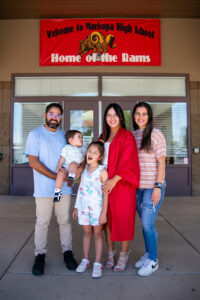
When Chris and Sylvia Garcia agreed to host a foreign exchange student, they expected to learn about another culture. They didn’t expect to gain another member of the family.
The Maricopa couple opened their Santa Rosa Crossing home to Hana Iwashita, a student from Japan who spent the school year experiencing life in Arizona. Along the way, Hana shared Japanese customs and home-cooked meals while learning about American and Latino culture.
“We learned a lot about her culture and customs in Japan,” Sylvia Garcia said. “She became part of us.”
Hana immersed herself in school life, participating in soccer, swimming and tennis, while also picking up a little Spanish in the Garcia household.
As Hana prepared to return home, the couple said saying goodbye wouldn’t be easy. The family’s daughter has come to think of her as a sister, and their 18-month-old son’s third word was “Hana.”
“We’re going to miss her,” Sylvia said.
The Garcias said they would gladly host another student in the future.
“It opens your heart to different personalities, different cultures and different aspects of the world around you,” Sylvia said. “Now we have family around the world.”