
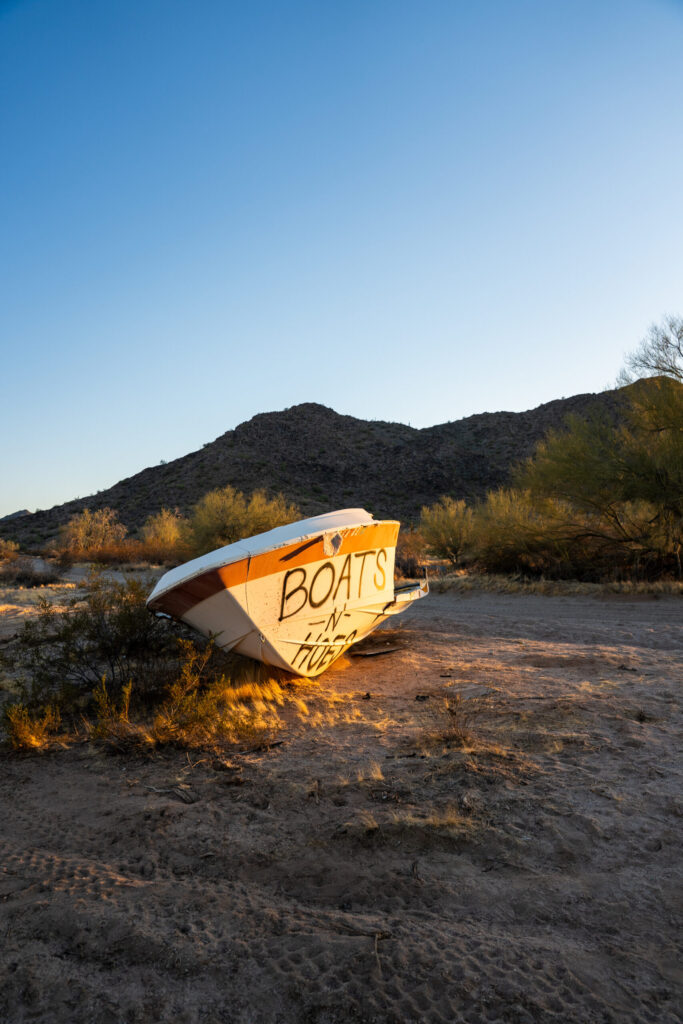
The shock has worn off for Hidden Valley resident Robin Davis. The things she pulls from the desert used to surprise her.
Who would leave a boat in the desert? Jet skis? Furniture?
Now, months into her crusade to clean up this rural oasis, nothing surprises her anymore.
“It’s nothing to pull a dozen tires at a time,” said Davis.
Along with several of her neighbors, Davis is taking a stand against illegal dumping and blight. This growing group of vocal neighbors are working closely with public officials to clean up their communities and protect their way of life.
Davis, 68, has spent months driving rural roads with her husband, hauling away trash, reporting illegal dump sites and even confronting suspected violators.
“We’re done with people dumping out here,” Davis said. “We’re ready to make an example of someone.”
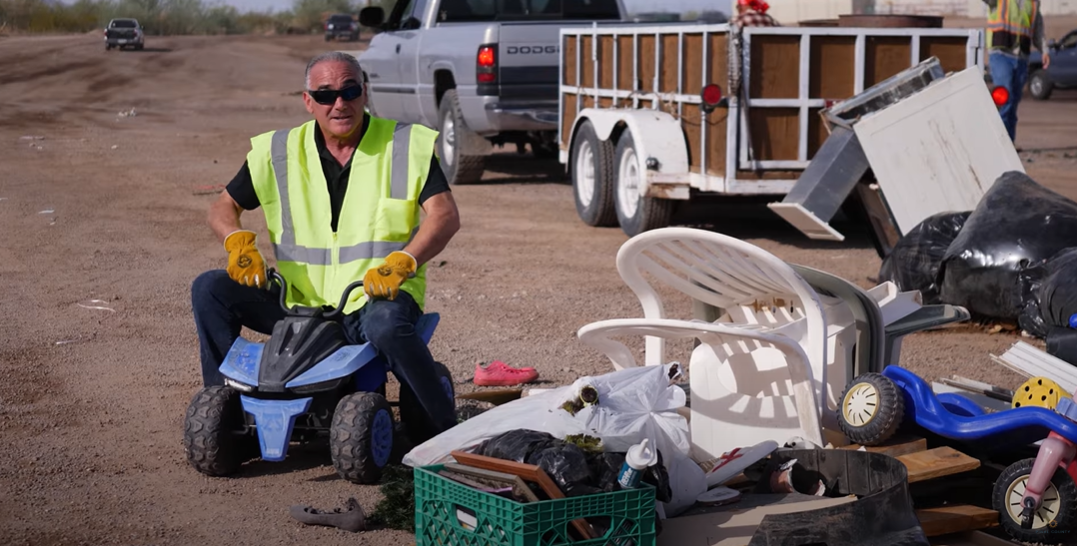
It costs $1 per tire for proper disposal in Pinal County. It costs nothing, at least for the litterer, to dump a tire in the open desert. Pinal County Public Works sent a team out for seven hours over two days to clean up tires and other dumped debris.
The county provides two official cleanup days a year, most recently in late March, first organized to allow residents to dispose of bulk waste. The focus of those dates has shifted over time to cleaning up illegal dump sites found around the open desert.
Davis knows it takes longer than a day to clean up, so she pre-cleans the neighborhood, pulling and stacking old tires on her property for quick disposal on cleanup day, she said.
With the help of public works and several of her Hidden Valley neighbors, Davis helped remove more than 200 tires, household furniture and animal remains from desert washes. Her efforts have helped identify chronic dump sites along Barnes and Ralston Roads and other dumping hotspots.

Do it right or pay the price
Community sleuthing and grassroots investigations recently led to confrontations with suspected dumpers. Cleaning up a bag of residential trash, Hidden Valley residents found discarded mail with a name and address. It was enough for Davis to jump into action.
She took it upon herself to confront the person on that envelope.
“I can’t let this ride,” she said.
She tracked the person down to an address in Maricopa’s Alterra neighborhood. InMaricopa contacted that homeowner by phone and through social media, but she did not respond to request for an interview before publication.
“I asked, ‘Is this you? I asked, is this your trash?’” she recalled of the homeowner whose name was found in the desert. “She never opened the door more than 12 inches. She was nervous. She said anyone could have taken my trash.
“It was a civil conversation,” said Davis.
Someone in the online cleanup community had matched a Google Street View photo of a truck on the property to some of the things dumped in the desert.
Davis turned the findings over to the Pinal County Sheriff’s Office, which is investigating the illegal dump. But she is remaining vigilant with her neighbors.
“We see you. We’re watching,” she said. “We’re not going to tolerate this anymore.”
The next day, the dump site was cleaned up. None of the neighbors know who cleaned it up.
The lesson was that public shaming worked.
‘Hidden Valley Haunting’
After another week, another envelope cropped up. This time, the cleanup crew was digging through a pile on State Route 238 and found the name of an EMT from Mesa. After some internet sleuthing, a Hidden Valley resident found the woman’s cell phone number, Facebook and LinkedIn page. He sent her a message.
“It’s still your trash, ho,” said a Hidden Valley garbage vigilante in a text message to the woman, calling her a derogatory slang term for a prostitute. The message was proudly posted to the Facebook group for all to see.
The group contacted the woman’s employer and started posting the photos of the dump site to the employer’s Facebook page as well.
“I suggest you go pick up your garbage,” said one poster. “Your Hidden Valley Haunting has commenced.”
“I hope she decides to come clean it up or someone decides to dump it in her driveway,” said another.
That woman, whose name InMaricopa is choosing not to include, described the messages this way in an interview: “I’ve been threatened with loss of my job and license, being arrested and harassment from others. I paid someone, a year ago, $150 for junk removal. I had no idea they didn’t take it to the dump like they were supposed to.”

Legal dumper weighs in
Homestead resident Andrew Harrison owns a Maricopa-based junk removal company. He’s gone to Hidden Valley to do cleanups. He’s frustrated by the growing mess and lack of affordable, legal disposal options.
“It just makes me mad,” Harrison said.
Harrison, who regularly documents dumpsites and posts cleanup videos online, recalled finding discarded Amazon boxes and even detailed medical records in one recent case. In another, a discarded hot tub came with a note from someone upset about the cost of legal disposal.
“That was dumped about a mile from the landfill,” said Harrison.
“People don’t realize how cheap the landfill is for a small load: $46 for up to a ton. That’s not bad,” he said.
Bulk pickup services can start as low as $75, and platforms like Facebook Marketplace or estate sales can help items find new homes without going to waste.
Pinal County Supervisor Rich Vitiello, who championed expanding cleanup days and recently helped on a clean-up day himself, echoed Davis’s frustration.
“People are driving out of Maricopa to dump their garbage. It’s wrong,” he said. “This isn’t yard waste: it’s tires, jet skis, furniture. They’re killing the wildlife. I’m no Mr. Green, but this is our environment.”
Larger fears loom
It’s not just about trash filling the desert. The broader issue, residents say, is tied to the impending threat of rapid development. With plans for tens of thousands of new homes already approved in Hidden Valley, some fear the rural character of the area is under siege.
“We’re fighting for our lives,” said Davis, referencing opposition to discussed dense housing. “We want to show the county we take pride in our community. We’re not country bumpkins you can push around.”
Although Hidden Valley is not incorporated into the city, development is spreading that way. Much of Hidden Valley will eventually be annexed into the city.
Here’s a quick rundown of the developments that have recently broken ground: Palomino Ranch is a 634-home subdivision situated on 184 acres on the north side of Papago Road, between White and Amarillo Valley Roads. Sunset Canyon, a 1,519-home subdivision, was approved Dec. 5. It is one block south at the future intersection of State Route 347 and Val Vista Road.
LGI Homes has started construction on Verida, a 544-home first phase of a subdivision spanning 158 acres at the southeast corner of Papago and Green Roads. Meanwhile, two phases of Ashton Woods’s Amarillo Creek are mostly built out.
More subdivisions will follow.
Although none of these are part of Maricopa today, new homeowners sign what is called a pre-annexation agreement, first approved by Maricopa City Council in 2022. All these communities will be annexed into the city once a planned fire station is built near Papago Road and John Wayne Parkway.
Construction starts once enough cash is raised from the South Maricopa Fire Association. Amarillo Creek homeowners have been paying into the fund since 2023.
For now, public shaming’s the best tool
When first contacted by phone for this interview, Davis didn’t answer. After listening to a voicemail message from reporters, she returned the call.
“I had to make sure you weren’t a developer first,” she said. “We’re getting so many calls and mail [from developers] asking to buy our homes. You wouldn’t believe it.”
Residents like Davis, along with allies such as James Cochran and Austin Nelson, are wary of new developments, which would step on their rural way of life. When asked for examples of those eager to develop areas of Hidden Valley, Davis named the former Maricopa mayor and current Economic Growth Officer Christian Price, whom she said advocates for development in her neighborhood.
When asked about those comments and future southward expansion, Price balked.
“While Hidden Valley is in our overall land use plan and part of our general plan and someday COULD be part of Maricopa, presently they are in the county,” said Price via email.
Davis recognizes the expansion is coming. She says she is pushing for smarter, more balanced growth. She wants to see a community meeting hall with enough space for local rodeo events and expanded recreational infrastructure under the county’s Open Trails initiative.
“We’re not against growth,” said Vitiello, the county supervisor who lives in Cobblestone Farms, “but we need smart growth that respects the land and lifestyle out here.”
While some cleanup efforts have led to swift county responses, including the removal of septic waste and tire piles, others rely on community vigilance, word of mouth and public pressure.
“If we can find a name or address, we can at least publicly shame them,” Davis said. “Just stop. Enough is enough.”




![Placeholder photo for injury crash at State Route 347 and Casa Blanca Road. [Brian Petersheim Jr.]](https://inmaricopa.com/wp-content/uploads/2026/07/20260709-petersheim-injury-crash-placeholder-300x170.jpg)