


If you’ve lived in the Maricopa area for the past three years, you’ve experienced the two hottest summers and the two warmest winters on record. So how can gardeners enjoy colorful blooms while surviving the desert heat?
The answer is choosing plants that thrive in our climate.
While flowering shrubs are always a good option, three of my favorite summer plants provide plenty of color with relatively little effort.
The queen of summer color
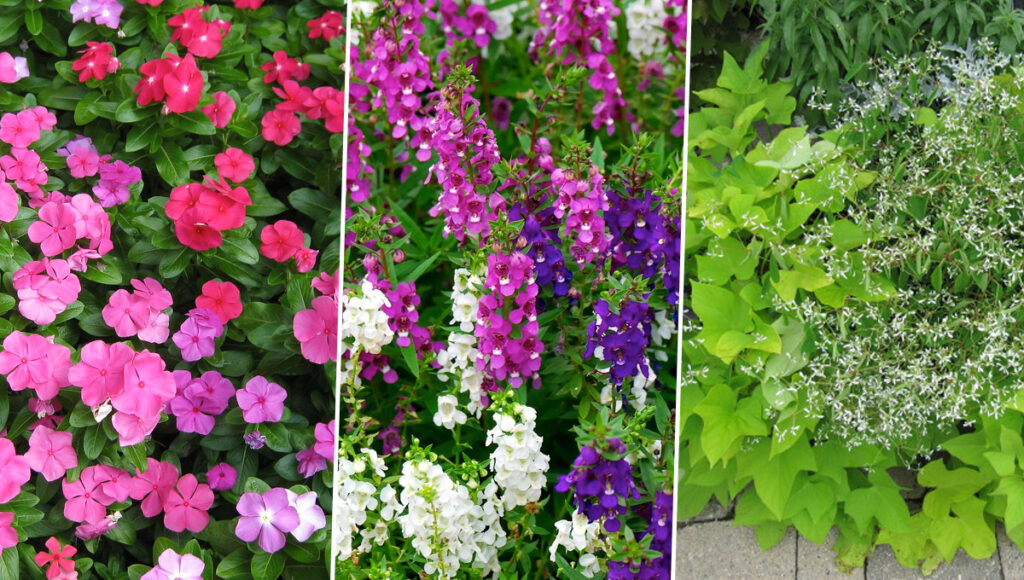
One of the most popular at the garden center is the vinca (Catharanthus roseus), a heat-loving annual that thrives in full sun and temperatures above 100 degrees. Drought tolerant and long blooming, vincas produce flowers until frost in shades of red, pink, salmon, white and violet.
These plants prefer well-drained soil, moderate watering and occasionaloccasionally slow-release fertilizer. While generally resilient, vincas can be susceptible to “vinca wilt,” a fungal disease that attacks the roots and prevents the plant from absorbing water, causing it to appear dry and wilted. Healthy vincas, however, can provide years of color with minimal care.
Pretty, purple and practically carefree
Another favorite is angelonia (Angelonia angustifolia), often called summer snapdragon or angel flower. Developed into modern varieties in Argentina during the 1990s, angelonia has become increasingly popular in Arizona because it thrives in hot, sunny conditions.
Available in white, pink, lavender, rose and purple, angelonia grows upright with spikes of blooms that attract pollinators. These drought-tolerant plants require little maintenance and do not need deadheading. They perform equally well in garden beds and containers.
Because of their popularity, angelonia can sell out quickly at local garden centers.
Lime-green foliage with dramatic flair
For dramatic foliage, consider Marguerite sweet potato vine (Ipomoea batatas ‘Marguerite’). This fast-growing annual is prized for its vibrant chartreuse, heart-shaped leaves and trailing habit.
Ideal for containers, hanging baskets and groundcover, it typically grows 6 to 10 inches tall and can spread 4 to 5 feet. It thrives in full sun to partial shade.
Propagation couldn’t be easier. Simply snip a 6- to 8-inch cutting, remove the lower leaves and place the stem in a jar of water. Healthy roots typically appear within three to seven days, and the cutting can then be planted in moist soil.
Choosing desert-adapted plants like these can bring vibrant color to your landscape while requiring relatively little effort during Arizona’s hottest months.
Wende Gehrt is a Pinal County Master Gardener.
This story was first published in the July issue of InMaricopa.