

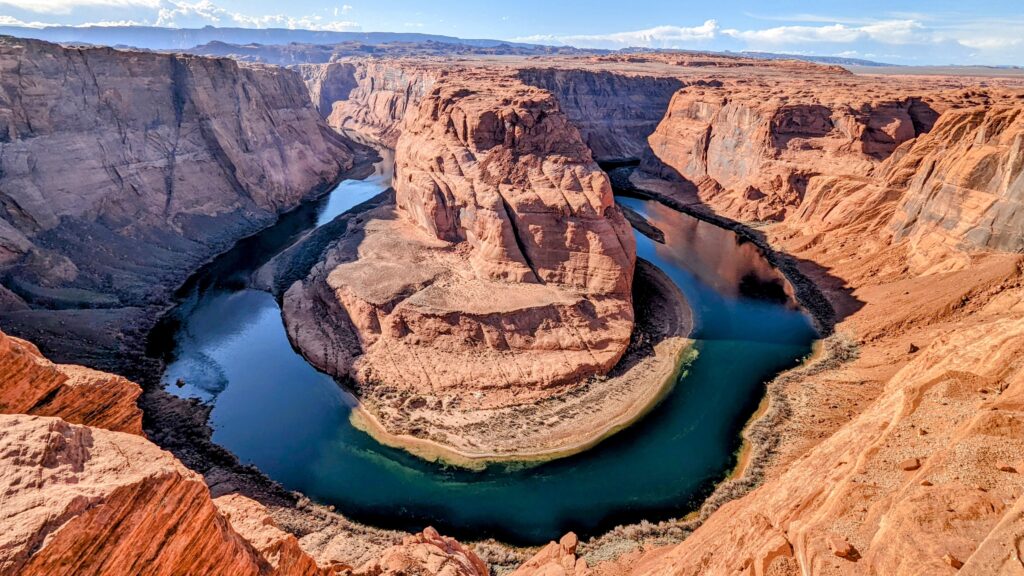

Water — it’s always been Arizona’s most valuable resource, and lately, it’s back in the headlines.
Ongoing drought and decades of heavy use have put increasing strain on the Colorado River system. Federal officials have already implemented reductions, and more cuts may be coming as Upper Basin and Lower Basin states remain locked in negotiations over how future shortages should be divided.
That raises a natural question for homebuyers across the region: What does this mean for local communities?
For Maricopa, the answer is relatively straightforward.
The city does not receive Colorado River water. It isn’t tied into the Central Arizona Project canal system that supplies much of metro Phoenix. While future regional impacts are always worth watching, Maricopa’s day-to-day water supply is not directly affected by Colorado River reductions.
Instead, Maricopa relies on groundwater — specifically the Maricopa-Stanfield sub-basin aquifer.
Global Water Resources, the city’s primary provider, holds a Designation of Assured Water Supply from the Arizona Department of Water Resources. As part of that designation, the utility demonstrated access to a 100-year water supply before serving customers.
The numbers show a comfortable margin.
Global Water has access to approximately 23,000 acre-feet of water annually, while current usage is around 8,000 acre-feet. That gap means the existing supply can support significant additional growth while continuing to meet current demand.
For those considering properties outside city limits, the approach can look a little different.
In areas like Hidden Valley, homeowners often rely on private wells. That comes with more control, but also more responsibility. Drilling costs in Arizona typically run between $40 and $45 per foot, with many wells reaching depths of 600 to 800 feet — and sometimes as deep as 1,000 feet, depending on conditions.
Once installed, ongoing maintenance and performance fall entirely on the homeowner. While most wells in the area continue to operate effectively, water levels and output can vary based on depth and location.
Within Maricopa’s city limits, however, the system is established, regulated and already scaled well below its available capacity.
While Colorado River discussions will continue to shape water policy across the Southwest, Maricopa’s position remains steady. The city’s supply comes from a different source — one that is already permitted, measured and currently underutilized.
For buyers looking at the area today, that’s a point of strength worth understanding.
This content first appeared in the May 2026 edition of InMaricopa Magazine.
2026 May issue of InMaricopa MagazineSPONSORED CONTENT





![Western Pinal Justice of the Peace Patricia Glover speaks during a City of Maricopa Republican Club on May 23, 2026. [Monica D. Spencer]](https://inmaricopa.com/wp-content/uploads/2026/05/20260529-spencer-teeple-republican-club-1-4-300x200.jpg)





6 Responses
This is great news. Also a good news story. More stories like this please.
Man, if only we could use the Gila river. Too bad we haven’t had that since long before I was born!
And how much of our water that data center that nobody asked for will end up using?
Oh, it’ll use more than it should. That’s a guarantee.
Not as extensive as you may think. If they are regulated to closed loop systems with heat exchange and demineralization treatment.
I’d rather just not have a data center here. We don’t need it.