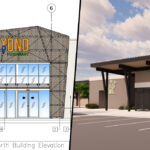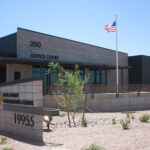


It has been a challenging year for Maricopa’s Sequoia Pathway Academy, which has felt the ripple effects of parent company Edkey’s efforts to right its financial ship. To shore up cash, Sequoia Pathway was sold Dec. 9 to Heritage Academy for $21 million. Edkey continues operating the campus through the end of the school year under a lease agreement with Heritage, with both sides saying they want to minimize disruption for students and families.
As Maricopa’s focus on the embattled Edkey wanes, it’s important to remember how the school got to this point. Below is a concise month-by-month timeline for calendar year 2025, using prior InMaricopa reporting.
January: As Edkey’s cash crisis deepened, Sequoia Pathway abruptly halted bus service to CAVIT, disrupting students’ access to trade programs and highlighting how financial instability was spilling into day-to-day operations. The move came as Edkey faced multiple creditor actions, emergency pleas to bondholders, missed obligations including payroll and retirement contributions, and just 43 days of operating cash on hand, well below state expectations. Senior leadership was fired over the holidays as the organization entered the new year in acute distress.
February: A charter school watchdog announced he would file a complaint with the Arizona Attorney General alleging that Edkey reported higher enrollment figures to bondholders than it did to the Arizona Department of Education, a discrepancy that could have meant millions in extra state aid. Edkey responded it would “fully cooperate” if the Attorney General’s Office pursued the matter.
March: Another round of layoffs, and a renewed internal focus on making payroll, paying vendors and keeping schools open.
April: Edkey started selling schools, starting with the ACAA, the Caurus campus and a fleet of cars. More audits were announced.
June: The Arizona State Board for Charter Schools placed Edkey into formal “Financial Intervention” after audited financials showed nearly a $10 million deficit and raised concerns about ongoing compliance and fiscal stability. Under this status, Edkey was required to submit corrective plans and quarterly financial reports or risk probation or further action.
July: As the new year began, the focus shifted to enrollment and retention. This was said to be the key to shoring up enough cash to stay afloat.
August: Preparing for hard months ahead, internal planning centered on expected volatility through the semester transition period (context reinforced by Edkey’s later internal commentary about the winter quarter being hardest).
September: Interim leadership changed and budget-to-actual disclosures highlighted growing instability.
October: Edkey told bondholders it had reached a six-month agreement with lenders to pause principal payments while continuing to pay interest, settled $1.75 million in high-cost merchant cash advance loans and was projecting a $1.3 million operating surplus. New CEO Nicholas Strange described the moment as a “turning point,” though executives warned they were barely able to make payroll. Edkey also confirmed it had eight properties listed for sale and said it was “not for sale” as an organization, even as it remained under state financial intervention.
November: Putting on a fresh face for investors, Edkey described its position as its “strongest month that fiscal year,” hitting forecast and holding the full-year outlook steady while warning that the first quarter of 2026 would likely be the hardest stretch. The charter school tried to find non-payroll savings and run “leaner.”
December: Before selling Sequoia Pathway, Edkey announced it had missed enrollment goals. Edkey closed the sale of the Sequoia Pathway campus to Heritage Academy while remaining the operator through year-end via lease to avoid disruption.





![Western Pinal Justice of the Peace Patricia Glover speaks during a City of Maricopa Republican Club on May 23, 2026. [Monica D. Spencer]](https://inmaricopa.com/wp-content/uploads/2026/05/20260529-spencer-teeple-republican-club-1-4-300x200.jpg)