

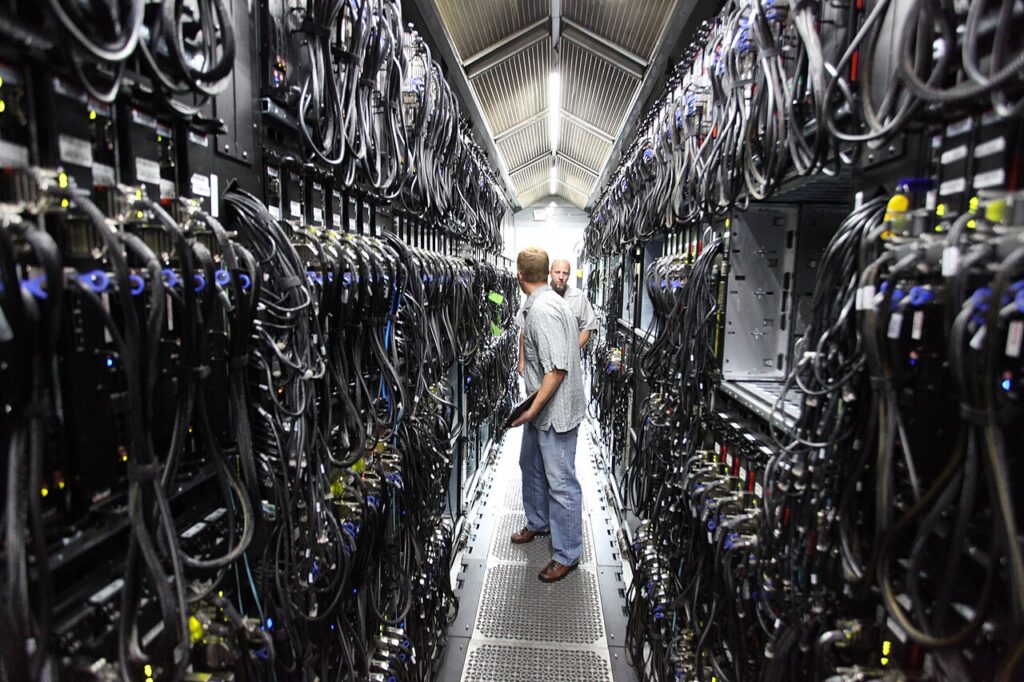
The Pinal County Board of Supervisors Wednesday hosted a work session on data centers to learn more about how they may affect the county’s energy, water and economy.
The two-hour presentation brought representatives from Arizona State University, Arizona Public Service, Salt River Project and the Arizona Commerce Authority to give a crash course on how data centers operate.
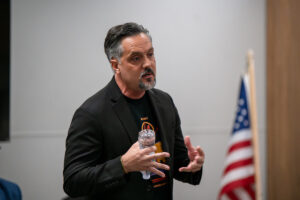
“It was a good start … It was a good start to somewhere and I think we had some good information,” said Supervisor Rich Vitiello (R-Maricopa).
He helped coordinate the work session in an effort to help educate constituents — and his fellow supervisors — about data centers, particularly after a growing number of projects are proposed for Pinal County, including one on Porter Road immediately south of Maricopa and the Ak-Chin Indian Community.
“There are a lot of misconceptions of are they good, are they bad … To be honest, I don’t know a whole lot [about data centers] so I’m trying to learn more,” Vitiello said.
Supervisor Jeff Serdy (R-Apache Junction) said during the session the question he and other supervisors tend to hear most often is, “When is enough enough?”
“Life was good five years ago, life was good 10 years ago. How much better is our life going to be when we have a data center on every corner? That’s what the people don’t understand and don’t see,” he said.
The session didn’t answer that question but it offered an overview of data centers. Speakers highlighted how data centers are among the fastest growing industry in the world — largely driven by increased use of artificial intelligence and cloud storage — while technological improvements have reduced water and energy use.
Sarah Porter, Director of ASU’s Kyl Center for Water Policy, said their research showed “the advent of data centers has not to date caused an increase in the use of unreplenished groundwater.”
How much water a data center uses is tough to pin down, Porter said.
“The question about [data centers are] going to use so much electricity and it’s going to require a lot of water to generate is very hard to really narrow down because it’s very hard to trace where the electrons come from,” she said. Estimates vary depending on the energy source and how much water it uses, as well as cooling methods.
Meanwhile, Patrick Bogle, Director of Data Center Strategy at APS, said they’re committed to avoiding shifting energy costs to its residential customers.
“We are not going to serve more data center load in the APS service territory if we cannot do it reliably or affordably. We’re not going to put other customers at risk of having reliability issues in Arizona to serve more data centers,” he said.
Still, the session seemed to prompt more questions for supervisors, which Vitiello said is helping him better understand the issue, much like he did with battery storage facilities.
“Technology is changing just like battery storage has changed. It’s getting better and smaller and safer. That’s what I’m trying to learn about data centers,” he said.











9 Responses
Data centers are a drain on the community taking resources and not delivering anything useful to the area. Beyond temporary construction work, data centers do NOT bring jobs or growth to your community. They raise your electric rates, and you are almost guaranteed to drink water that at some point passed through their cooling systems. Besides employing a few security guards and maintenance staff data centers do nothing to improve the community. No, they are NOT giant hubs of high paid tech workers, they are giant buildings full of servers that need no human intervention to function.
Your words ring true. We can only hope that these people in power will see what bullshit these data centers are.
Thank you Chester.But it won’t really matter as the County and City do as they want…….not what the taxpayer needs.
Something this major should be presented in print to the Board. The proposal should answer all of the negatives and positives which “may” occur from this business proposal and after in place.
Knowing whether costs can shift to residents or not is a good question to raise. The same holds true for local resources. The Board should not speculate on these potential issues. Hire an expert that can advise the Board.
As a planner, we have done such in the past
Hi Bill, I agree and I am working on that. The work session was step 1. Check out the work session. https://www.youtube.com/watch?v=WJa_LnQ5doI&t=1523s&pp=ygUncGluYWwgY291bnR5IGJvcyB3b3JrIHNlc3Npb24gNC8xNS8yMDI2
How about we don’t have data centers in areas with limited water supplies, such as deserts? From what I know, AI isn’t very profitable, so bringing junk like this here definitely won’t help our city.
I’m looking forward to that AI bubble bursting and bankrupting these ghouls.
I’d rather have these data centers than crypto mining farms. At least it gives a little value I guess.
Republicans: “Our Earth is a precious gift from God above!!!”
Also Republicans: “Let’s destroy the shit out of it and extract every last drop of resources out of it because I want more $$$$$”