

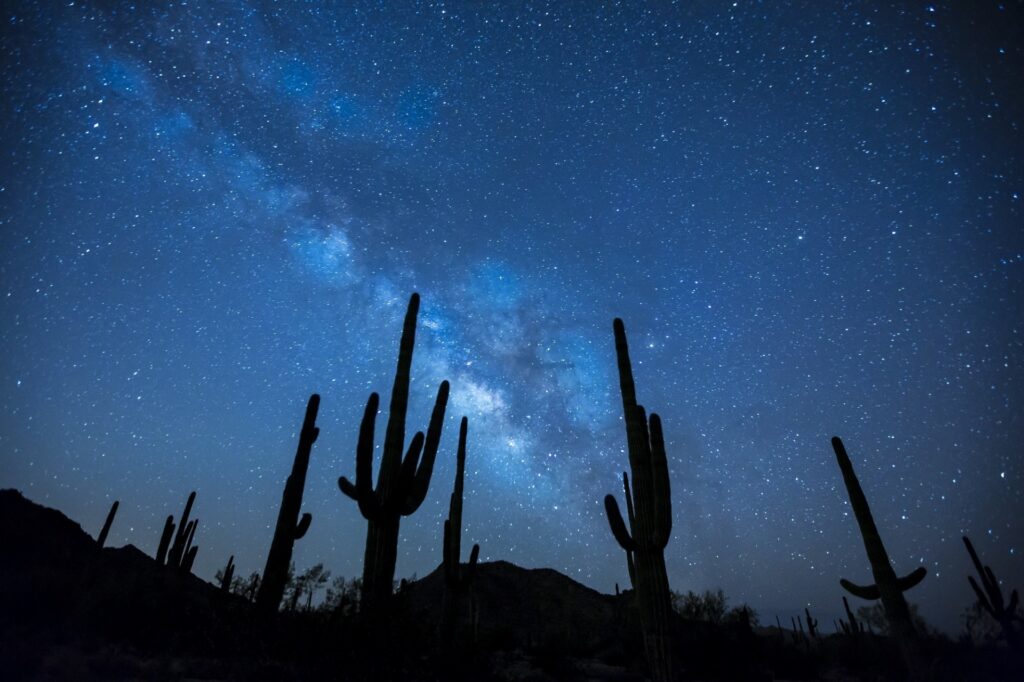
As Pinal County invites residents to flip the switch and step outside next week, Maricopa will once again be one of the best places in the county to actually see what they’re talking about.
International Dark Sky Week runs April 13-20, and county officials are promoting a simple ask: Turn off your lights for 30 minutes, look up and take in a sky that much of the country can no longer see.
That includes a local event right here in Maricopa.
A “Stars, Stories & S’mores” gathering is scheduled for April 15 from 6 to 8 p.m. at West Pinal Park , offering residents a guided way to experience the night sky while learning why it’s disappearing in growing communities like Maricopa.
The weeklong lineup also includes star parties, telescope demonstrations and similar events across Pinal County, from Oracle State Park to Gold Canyon and San Manuel.
Why it matters in Maricopa
The effort ties directly into a growing issue locally: light pollution.
As Maricopa continues to add rooftops, streetlights and commercial development, more artificial light spills into the night sky. That glow, known as skyglow, washes out stars, limits visibility and contributes to broader environmental and health concerns.
Light pollution is defined as the human-made alteration of outdoor light levels. It typically shows up in three ways:
- Glare, or excessive brightness that causes visual discomfort
- Skyglow, the bright haze over populated areas
- Light trespass, when light spills into places it is not needed
Maricopa already has a lighting code requiring features like downward-facing, full-cutoff fixtures to limit that impact. But participation from residents, whether switching to LED lights with timers and dimmers or simply shutting off unnecessary lights, remains a key piece of the puzzle.
How to actually see the stars here
Unlike most of the metro area, Maricopa still offers relatively dark skies, especially on the outskirts and away from major corridors like John Wayne Parkway.

If you want to take advantage during Dark Sky Week or any clear night:
- Get away from direct light sources. Parks, open desert and neighborhood edges perform best
- Give your eyes 15 to 20 minutes to adjust to darkness
- Avoid looking at your phone or bright screens
- Look for the Milky Way stretching across the sky on clear nights
- Use binoculars or a telescope if available, but they are not required
Even small changes at home can make a difference:
- Install motion sensors or timers on outdoor lights
- Use warmer, lower-intensity bulbs
- Aim lights downward instead of outward
- Turn off unnecessary lights when not in use
County officials emphasize that dark sky efforts do not mean eliminating lighting altogether, but using it responsibly.
A simple ask with a visible payoff
The centerpiece of the week is the “Dark Sky Lights Out” moment, a voluntary 30-minute period where residents are encouraged to switch off nonessential lights and step outside.
In a place like Maricopa, where the night sky is still within reach, that small change can make a noticeable difference almost immediately.












3 Responses
What is the 30 minutes meant to be at? I assume that there’s a specific time for max efficiency, but I couldn’t find one specified anywhere.
Too bad my neighbor leaves her patio lights on 24/7/365 and STILL has her friggin Christmas lights up…and on.
Her power bill must be crazy.