

To the editor,
As our community grows, so do the ways people move around our city. In recent years, we’ve seen a dramatic increase in bicycles, e-bikes, scooters and other mobility devices being used throughout our neighborhoods and along our major roadways. At the same time, we continue to hear concerns from residents about pedestrian safety and confusion around where and how different users should share public space.
Maricopa City Council is currently reviewing proposed updates to our city code related to sidewalk use and pedestrian safety, and I want to hear directly from residents before any decisions are made.
Today, many of our rules are based on broad prohibitions that can be difficult to enforce consistently and may not reflect how people actually travel through our community. For example, riders frequently choose sidewalks along high-speed roadways because they feel safer there, especially when bike lanes or other infrastructure are limited.
The proposed amendments aim to modernize our approach by shifting toward behavior-based safety standards instead of simple location bans. In practical terms, the proposal would treat sidewalks as multi-use paths, allowing bicycles and certain low-power electric mobility devices to operate on them so long as they travel at reasonable speeds and yield to pedestrians. Gas-powered devices would remain prohibited.
Pedestrians would continue to have the highest priority on sidewalks. Anyone riding a device would be required to slow when approaching pedestrians and operate carefully based on sidewalk conditions.
The proposal also addresses pedestrian crossings. It would clarify that pedestrians should use crosswalks or signalized intersections where they are available and discourage crossing between adjacent intersections that already have controlled crossings.
Additionally, the amendments would restrict standing or remaining in travel lanes or medians that are not designed for pedestrian use, except when actively crossing or waiting safely at a crossing point.
The goal behind these changes is simple: reduce exposure to high-speed traffic, encourage predictable behavior on our streets and give law enforcement clearer standards to address unsafe actions rather than technical violations.
But before any changes move forward, I believe it is important to hear from the people who use our sidewalks, streets and trails every day.
Do you feel safe sharing sidewalks with bikes or e-scooters? Do you think riders should be allowed on sidewalks along major roads? Are there areas where pedestrian crossings are particularly challenging or dangerous?
Your feedback matters. Policies like these affect families walking to school, residents exercising in our neighborhoods, seniors navigating sidewalks and young people riding bikes or scooters.
As a councilmember, I believe the best policy decisions are made when they reflect real-world experience from the community we serve. I encourage residents to review the proposed changes and share their thoughts so we can strike the right balance between mobility, safety and common sense.
Our city works best when we work together.
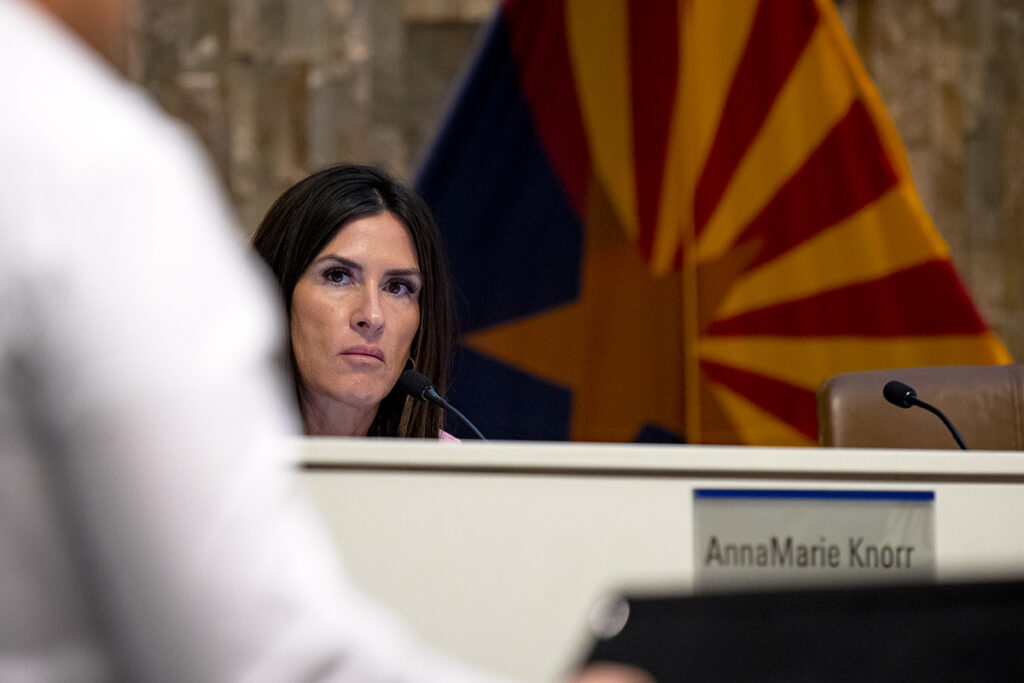
AnnaMarie Knorr, Maricopa City Councilmember







6 Responses
Yes absolutely! From the Dollar Tree to the fitness center the skateboarding is going wild. The workers coming out of Goodwill almost get hit by these kids. Someone is going to get hurt bad. No bikes or skateboards or scooters on the sidewalks of retail commercial buildings.
Where do you want them to go, the street that’s full of cars that could easily hit them because drivers here are shit? Yeah, that’d not cause any problems!
Personally, I feel safe with riders on the sidewalk. They’re not doing anything wrong.
I would want any micromobility device to have the freedom of using the sidewalk, rather than have them be on the same road as bad drivers.
I like the increase of people using scooters and bicycles, and don’t want them be discouraged from using them because they have to risk being hit by someone on their phone.
I live on Smith-Enke. I run ultra-distance miles on these roads before sunrise and ride everything from mountain bikes to Class 2/3 e-bikes to a triathlon race bike. I’m out here every single day. I’m exactly who this proposal is supposed to protect — and it doesn’t.
The proposal is behavior management, not safety reform.
Four of five amendments restrict or add legal exposure to pedestrians and cyclists. None address speed, fund infrastructure, or close a single sidewalk gap on SR-347, Smith-Enke, or SR-238. There are stretches where you’re in the road because there’s nowhere else to go — and this proposal makes that a clearer code violation without doing anything about why it happens. One in five pedestrian crashes in Pinal County results in a fatality. That’s not a jaywalking problem. That’s a speed and infrastructure problem.
In residential neighborhoods, this proposal creates the danger it claims to prevent.
Kids ride bikes in the roadway in Maricopa neighborhoods — and that’s appropriate. Lower speeds, predictable sightlines, drivers expecting mixed users. Pushing them onto sidewalks that meander across driveways and alongside parked cars puts fast-moving riders somewhere drivers simply don’t expect them. When I pull out of my driveway I’m watching the road — not the sidewalk. A kid at 15 mph across my driveway apron is invisible until it’s too late. That’s not inattention, that’s driveway geometry. If that rider is on an uninsured e-bike, the person they hit has almost no civil recourse under current law. That needs to be addressed before this ordinance passes.
On high-speed corridors, pushing cyclists to the sidewalk makes things worse.
On Smith-Enke, SR-347, and SR-238 the answer isn’t sidewalks — it’s dedicated road access. The speed issue goes well beyond motor assist. Limit an e-bike to Class 1 and the unassisted rider on a road bike may still pass them. Between my road and triathlon bikes I can personally exceed Class 3 motor-assist speeds on flat terrain — and I have multiple e-bikes on top of that. Even my heavy mountain bike cruises neighborhood roads at 18-20mph without much effort. Most people don’t realize how fast an ordinary rider moves at a casual pace. Pushing any of that onto meandering sidewalks doesn’t just conflict with pedestrians — it turns the sidewalk into a de facto passing lane along roads where drivers are already navigating unpredictable sidewalk geometry through every turn and driveway crossing. Since COVID made these roads too dangerous to ride comfortably, I’ve moved almost entirely to indoor training. This proposal gives me no reason to reconsider that decision.
The bike lanes we have aren’t safe — and that’s a driver enforcement problem.
Where bike lanes exist, I find cars parked in them daily during school pickup in front of posted no-parking signs — forcing cyclists into live traffic and creating blind-turn hazards for everyone. It isn’t enforced. Arizona’s 3-foot passing law (ARS 28-735) doesn’t help — it caps civil penalties at $1,000 and that enhanced penalty doesn’t even apply if a bike lane was nearby, even if it was blocked. Painted lines without enforcement are just paint.
Speed is an enforcement and design problem — not just a number on a sign.
From my backyard I watch drivers drag racing between lights on Smith-Enke daily — including heavy semis running the corridor with apparent impunity. Which raises a question the city needs to answer publicly: does MPD have CVSA-certified officers with the authority to cite commercial vehicles? If not, the heaviest vehicles on these roads are effectively above local enforcement. As Chief Goodman acknowledged at the March 3rd Council meeting, speed is a significant crash factor — then deferred to traffic engineering. That referral needs to happen immediately. These aren’t arterials. They’re over-widened residential corridors that look like highways, so drivers treat them like highways. Physical calming must accompany any speed reduction or the sign is meaningless.
Here’s what I’d actually like to see:
1. Pedestrian and Cyclist Infrastructure Gap Audit — 90 days. Map every missing sidewalk and bike facility on Smith-Enke, SR-347, and SR-238. Cost it out. Identify federal funding through HSIP and Safe Streets grants. Ranked, funded, with a construction timeline. No local tax increase required.
2. Enforce the Infrastructure We Already Have — All of It. Bike lane obstruction during school hours is a daily safety violation — treat it like one. And publicly confirm whether MPD has CVSA-certified personnel for commercial vehicle enforcement. If not, close that gap.
3. Dedicated Traffic Enforcement on Problem Corridors. Regular visible MPD presence on Smith-Enke and SR-347 during peak hours changes behavior immediately and durably. No new personnel needed — just deploy where the crash data already points.
4. Formal Speed Limit Engineering Review — 60 days. Request an 85th-percentile study from ADOT on Smith-Enke and SR-347 now. Pair any reduction with physical traffic calming — raised crosswalks, curb extensions, refuge islands. The road has to look like what it is before drivers will treat it that way.
5. HAWK Beacon Installations at High-Volume Crossing Points. Federal research shows HAWK signals reduce pedestrian crashes by 69% at a fraction of full signal cost. Install them where people are already crossing, fund through HSIP, and track the outcomes. Measurable progress — not a behavioral restriction.
6. Adopt a Vision Zero Resolution. Tempe was Arizona’s first Vision Zero city — engineering, enforcement, and corridor improvements driven by crash data. Maricopa doesn’t need Tempe’s budget. It needs the commitment: zero pedestrian and cyclist fatalities as a real goal, backed by an annual crash report holding the city accountable to outcomes, not just ordinances.
The bottom line:
This proposal pushes kids off neighborhood roads onto sidewalks where drivers can’t see them, turns those same sidewalks into de facto passing lanes on our fastest corridors, and adds code violations for the most vulnerable road users while bike lanes sit blocked every school afternoon with no response. I have a garage full of bikes and since COVID I’ve been riding indoors because my own neighborhood became too dangerous to ride in. This proposal doesn’t change that — it just makes me more liable for surviving it.
Pass the code changes if you believe they’re needed. But attach to them a binding commitment to infrastructure and enforcement. Make the ordinance the floor, not the ceiling — because right now it reads like the city protecting itself from liability, not protecting the people who actually use these roads.
Putting e-bikes and e-scooters on sidewalks is irresponsible at best.Are you reading all this Ms Knorr?Chief Goodman has no right to suggest taking away the sidewalks from people simply walking.All of your new apartments are going to bring many e-bike and e-scooters for cheap transportation and ZERO liability.What are you thinking city leadership?Another LA,Portland,NYCity?Stop it now!