


On Nov. 22, 2024, a meetup on a street corner in the Maricopa Meadows turned deadly.
A group of teenagers arranged to connect near a neighborhood intersection. Too young to buy vapes legally, they found someone willing to sell. Then someone pulled a gun and fired it.
Esteban Valenzuela, 16, was shot and killed.
The slaying shocked the community. At a memorial set up on Dancer Lane, his mother, Aurora Martinez, said the loss shattered her family. “He was my protector,” she told InMaricopa. “Anywhere we would go, he was always watching over me and his sister.” Eliot Jackson and Isaiah Bandin, both under 18, are being charged as adults in Valenzuela’s death.
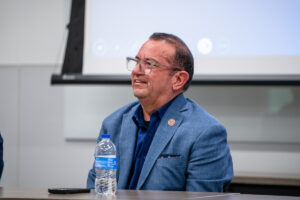
Pinal County Attorney Brad Miller’s team is prosecuting that case.
“That’s a vape dealer. Think about that,” said Miller, marveling about how little someone died for. Miller is wary of discussing the pending cases, as they’re both slated for conclusions next month.
What he could say, speaking to InMaricopa in his Florence office Oct. 29, is the charges against these teens are becoming more common.
“I can tell you five other of those exact situations that have happened. That’s the type of crime that’s becoming more pervasive,” said Miller.
Florence, we have a problem
The number of youth violent offenders being prosecuted in the county is skyrocketing.
The trend has left Miller searching for answers.
“I might be your first politician who says I don’t have all the answers,” said Miller, “but we have to look at these things because the community groups are asking: How do we resolve this?”
For Miller, sworn in a year ago, resolution starts with an uncomfortable pivot away from slogans and toward consequences.
“People think education is the end all, be all,” he said. “It is a piece, but accountability is also a piece. And accountability equals humility, humility to realize we don’t have it all figured out, that we need to learn from each other.”
He points to a culture of quick escalation. In his short tenure, his office has prosecuted a slew of road rage shootings on State Route 347 — a vivid example of that trend.
“If somebody cuts you off on the 347, you probably shouldn’t pull a gun and shoot them,” he said. “It’s happening all the time. And now they’re claiming self-defense.”
Miller laid out stark numbers that show the scope of the problem: Youth violence and gun cases are climbing across Pinal County. The county recorded 238 “youth violent cases” in 2022 under Arizona’s Title 13, which includes assaults and certain disorderly conduct offenses.
“We’ve already surpassed ‘22,” he said in October. “We’re on track to basically blow past ‘23 and ‘24.”
He says juvenile gun possession cases “skyrocketed” from 2022 to 2023, pointing to a more than 23% jump during that period. This year is on pace for a similar spike, but the behavior has shifted, with more guns used in robberies, not just carried.

Filling in loopholes
One pattern Miller’s office is seeing involves teen violence linked to THC vape cartridges, often supplied illegally by adults.
“They’ll call a dealer up, say ‘come meet us at this location so we can buy THC vapes,’ and then they surround them with guns,” he said.
Reporters and residents often push for a single explanation. Miller refuses to oversimplify.
“Every constituent asks us the ‘why,’” he said. “It’s never one thing. But we do see some themes: lack of parental supervision. Drugs. Repeat offenders.”
He said the juvenile justice system’s focus on rehabilitation leaves prosecutors with fewer tools, since there is not mandatory prison time for even dangerous offenses. As a result, his office increasingly files adult charges in violent juvenile cases, especially those involving guns.
“When we get a youth violent case, especially involving a gun or a repeat felony offender, we will almost always send them to adult,” he said. “We don’t believe the juvenile system has the capability of holding youth offenders accountable.”
Miller says his office’s organizational structure and charging approach have not changed. The same bureaus — juvenile, special victims, vehicular and general felony — remain in place, and the chief over juvenile has been constant across the comparison years.
“Nothing in terms of policy or charging has changed,” he said. “The same policies have been applied. But you can see the skyrocketing numbers.”
On plea offers, he says expectations are explicit.
“We have a 38-page document. We’re 100% transparent about our pleas and expectations.
“Serious cases — first-degree murder, drive-by shootings, for example — come directly to me. We bring them to incident review with our bureau chiefs. At the end of the day, the decision is mine. In some juvenile involved homicides, depending on the facts, we probably won’t offer a plea because some of these people need to be locked up for life.”
Critics counter that prison only hardens kids.
Miller doesn’t mince words in his answer.
“It makes the problem better because now we have a violent person who’s not part of our society committing violence again,” he said. “The No. 1 predictor of violence is committing a violent act prior. Our biggest problem is we do not hold repeat offenders accountable enough to keep them away from society.”
He also has policy frustrations.
Arizona’s drive-by statute requires the vehicle to be moving during the shots. He says crews now park, fire and leave, dodging the harshest charges on a technicality.
“We’re trying to fix that at the legislature next session,” he offered.

Miller blames parents, calls for more arrests
If Miller sounds unyielding, his cultural diagnosis is sharper.
“Parents aren’t watching their children. They’re not talking to them,” he said. “Worse, when a kid assaults someone at school and we bring them into court, the parents defend the child.”
“The system failed them,” say parents, in Miller’s retelling.
“No. The parent created the situation.”
Pressed on whether this is just another version of “kids these days,” Miller pointed to high potency THC and escalation to violence: “Kids smoking cigarettes outside the mall weren’t shooting each other for the cigarettes.”
He says his office tested wider diversion for meth users and has since ruled the efforts futile.
“In 10 months, we found out that you cannot bend recidivism if they don’t want to be held accountable,” he said.
Miller describes the job as constant triage guided by a single philosophy.
“We need to get back to accountability,” he said. “People say you can’t arrest or imprison your way out of this problem. I disagree. We will attempt to do that. Is that the No. 1 thing we seek? No. We would love to rehabilitate. But there are some people who are so violent, we have to put them in prison, and we will be harsh on these cases.”
Miller said accountability must be matched with something else — humility.
“Humility to realize we don’t have it all figured out,” he said.
“But pulling a gun because someone cut you off on the 347? That’s not humility. That’s not accountability. And that’s not who we can afford to be.”
Eliot Jackson turned 18 last month. He pleaded not guilty. His jury trial is scheduled for January.
Isaiah Bandin, now 17, is being tried as an adult. At press time, he was preparing for a Nov. 17 hearing in Pinal County Superior Court, where he was expected to plead guilty.

![Placeholder photo for injury crash at State Route 347 and Casa Blanca Road. [Brian Petersheim Jr.]](https://inmaricopa.com/wp-content/uploads/2026/07/20260709-petersheim-injury-crash-placeholder-300x170.jpg)





![Placeholder photo for injury crash at State Route 347 and Casa Blanca Road. [Brian Petersheim Jr.]](https://inmaricopa.com/wp-content/uploads/2026/07/20260709-petersheim-injury-crash-placeholder-150x150.jpg)



One Response
Make sure you keep cracking down on those pesky speeders instead of the violent criminals, law enforcement officers!